Pelvic Floor and Sexual Function: The Evidence Men Don't Get Told
The pelvic floor controls ejaculation timing, erectile rigidity, and orgasm intensity. Most men never train these muscles. Here is what research shows.
There are two parallel literatures on pelvic floor function in men. One lives in urology journals, where the pelvic floor is discussed as a continence and post-surgical rehabilitation tool. The other exists in sexual medicine, where the same muscles are documented as primary determinants of erectile rigidity, ejaculation timing, and orgasm intensity.
These literatures almost never talk to each other. The result is that most men receive excellent pelvic floor information after prostate surgery and essentially none of it at any other point in their lives, despite the fact that the relevance is lifelong and the interventions are simple.
The ischiocavernosus: the most important muscle you've never heard of
The ischiocavernosus is a paired superficial pelvic floor muscle that originates at the ischial tuberosities (the bony prominences you sit on) and inserts onto the base of the penile crura — the root of the penis that attaches to the pubic arch. Its contraction compresses the crural bodies and the deep dorsal penile vein simultaneously.
The physiological effect of ischiocavernosus contraction during erection: it functions as a vascular tourniquet, reducing venous outflow from the penile corpus cavernosum while the arterial inflow continues. This is what transforms an erection from partial (the arterial contribution alone) to fully rigid (the mechanical compression contribution added).
Dorey et al. (2004) [^dorey2004] confirmed the mechanism clinically: in their RCT of pelvic floor muscle training for erectile dysfunction, the 40% of men who achieved normal erections showed electromyographic evidence of ischiocavernosus function returning. Men with intact vascular supply but impaired ischiocavernosus function can experience adequate tumescence but poor rigidity — a pattern often misdiagnosed as arterial insufficiency.
The bulbocavernosus: ejaculation and penile rigidity
The bulbocavernosus (bulbospongiosus) is the medial superficial pelvic floor muscle, encircling the penile bulb. During ejaculation, it contracts rhythmically at 0.8-second intervals, producing the propulsive contractions that expel semen with force. These contractions are coordinated by the pudendal nerve and are partially under voluntary control.
Voluntary control of bulbocavernosus contraction has two practical implications:
For premature ejaculation: The ejaculatory reflex can be partially delayed through voluntary inhibition of bulbocavernosus activation. This is a learnable skill. Several studies show that pelvic floor muscle training, specifically targeting awareness of the pre-ejaculatory bulbocavernosus activation, significantly extends intravaginal ejaculatory latency time in men with lifelong PE.
For orgasm intensity: The subjective intensity of orgasm correlates with the amplitude and frequency of bulbocavernosus and ischiocavernosus contractions. Lavoisier et al. (1995) [^lavoisier1988] documented that orgasm intensity (measured by pelvic floor EMG amplitude) varies considerably between individuals and sessions, and that higher amplitude contractions correlate with higher reported intensity. Pelvic floor strength training produces measurably larger contraction amplitudes.
The levator ani: postural support and pelvic pressure management
The deep levator ani group — pubococcygeus, iliococcygeus, puborectalis — forms the primary supportive layer beneath the pelvic organs. In the context of sexual function, the levator ani contributes to:
- Maintenance of perineal position during arousal (engorgement of perineal structures)
- Pressure management during sexual activity (preventing pelvic organ descent under increased intra-abdominal pressure)
- The tonic "background" contraction that contributes to the feeling of pelvic engagement during arousal
Balmforth & Cardozo (2006) [^balmforth2006] reviewed the evidence for pelvic floor dysfunction in men, noting that levator ani weakness is associated with reduced sexual satisfaction scores independently of other factors — suggesting a role beyond the biomechanical explanation of ischiocavernosus and bulbocavernosus alone.
Post-prostatectomy: the clearest evidence
The strongest evidence for pelvic floor function and sexual outcomes comes from post-prostatectomy studies, where the disruption is discrete and the recovery can be measured.
Prota et al. (2012) [^prota2012] randomized radical prostatectomy patients to early biofeedback-guided pelvic floor training vs standard care. At 6 months, the training group had significantly better erectile function scores. The mechanism: radical prostatectomy disrupts the cavernous nerves, but the erectile rigidity contributed by the ischiocavernosus/bulbocavernosus complex is preserved if these muscles are maintained and strengthened.
The training gap
The pelvic floor muscles are not adequately loaded by standard exercise. Men who perform regular resistance training, including squats and deadlifts, typically maintain reasonable levator ani function through the postural demands. But the superficial layer — ischiocavernosus and bulbocavernosus — requires specific attention.
The pelvic floor protocol in the separate guide (see pelvic floor guide) covers the technique. The relevant addition here: the "power" component of pelvic floor training — rapid, maximal contractions — specifically targets the fast-twitch fibers of the superficial layer, which are the fibers that produce the contraction amplitude associated with ejaculatory force and orgasm intensity.
For most men, adding 5 minutes of dedicated pelvic floor work to an existing exercise routine represents an investment with outsized returns on a domain of health that is rarely discussed and even more rarely addressed.
The hypertonia caveat
One critical note: the above applies to men with normal or reduced pelvic floor tone. Men with pelvic floor hypertonia — chronically over-tight muscles — experience different dysfunction: difficulty with ejaculation, pain during/after sex, and sometimes erectile dysfunction through a completely different mechanism (tonic muscle contraction creating venous compression that impairs arterial inflow).
The pelvic floor awareness assessment (linked below) specifically screens for this pattern before recommending a training protocol.
References
- Dorey G, Speakman MJ, Feneley RC, Swinkels A, Dunn CD. A randomised controlled trial of pelvic floor muscle exercises to treat erectile dysfunction. BJU International (2004). PubMed:15529991
- Lavoisier P, Aloui R, Schmidt MH, Watrelot A. Clitoral blood flow and vaginal pressure changes during orgasm. Journal of Sex Research (1995). DOI:10.1080/00224499509551795
- Balmforth JR, Cardozo LD. Pelvic floor dysfunction in men: a rehabilitation approach. British Journal of Obstetrics and Gynaecology (2006). DOI:10.1111/j.1471-0528.2006.01066.x
- Prota C, Gomes CM, Ribeiro LH et al.. Early postoperative pelvic-floor biofeedback improves erectile function in men undergoing radical prostatectomy. International Journal of Impotence Research (2012). PubMed:22377790
Pelvic Floor Function Self-Assessment
Anonymous · 5 minutes · No account needed
Related Articles
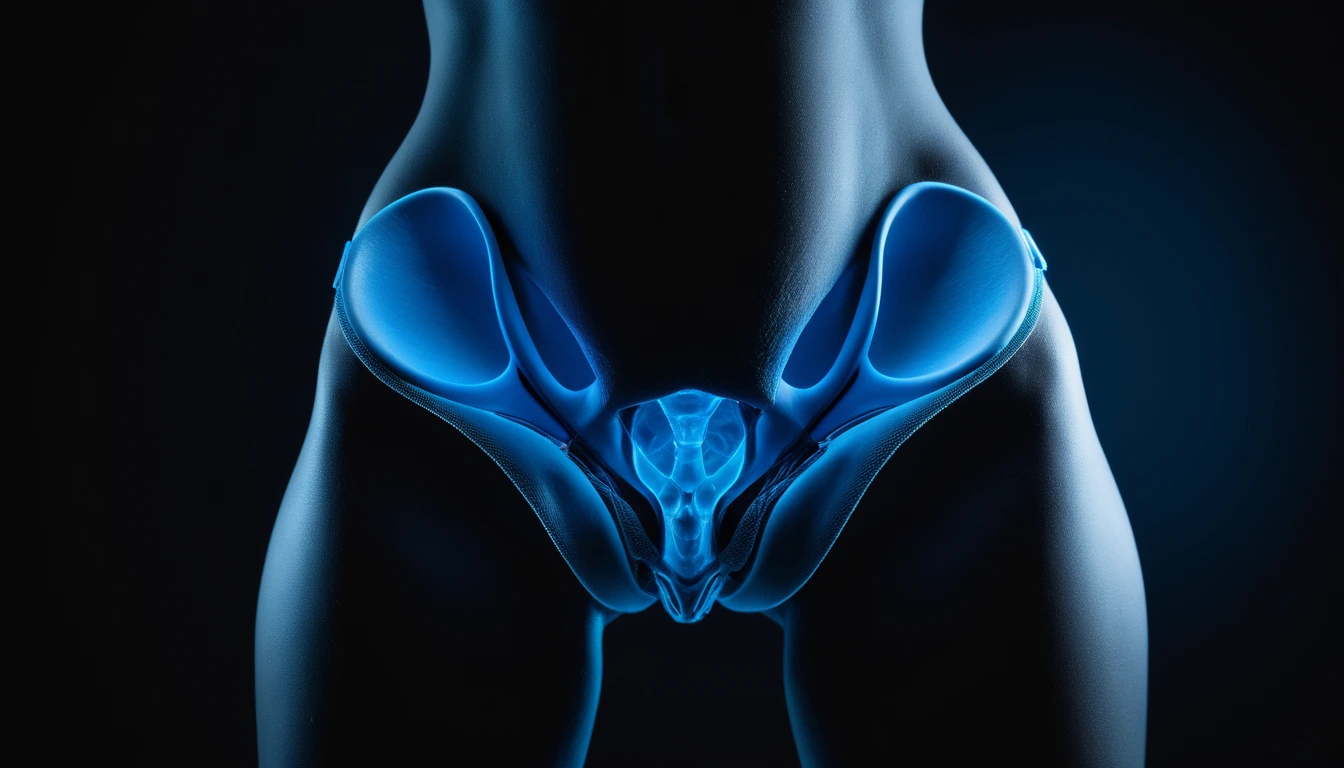 Tier 1 · Pelvic Floor
Pelvic Floor Exercises for Erectile Dysfunction: What the Evidence Shows
Pelvic floor training improves erectile function in 40-75% of men. Stronger evidence than pills for some populations. Protocol and mechanisms explained.
 Tier 2 · Pelvic Floor
Kegel Training for Men: The Complete 12-Week Protocol
Kegel exercises treat erectile dysfunction, premature ejaculation, and incontinence in men. RCT evidence, correct technique, and a 12-week protocol.
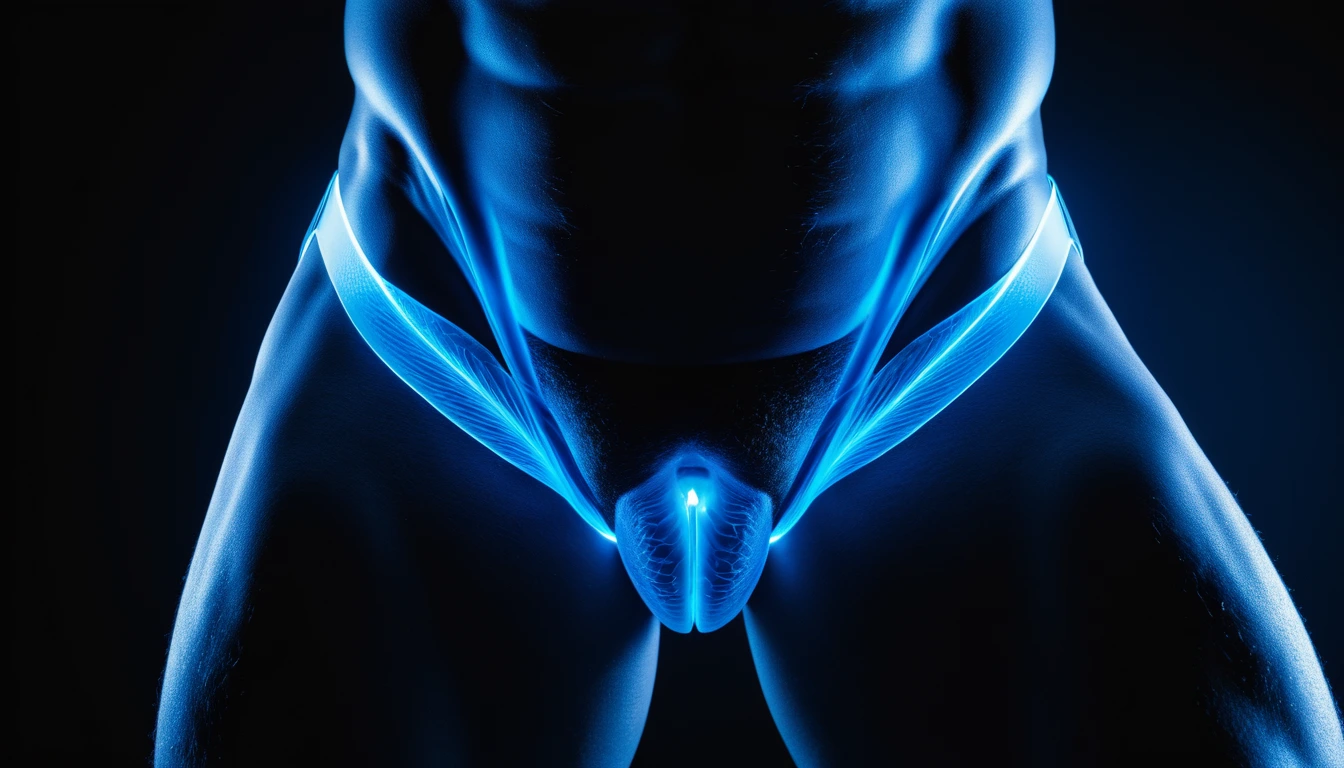 Tier 1 · Pelvic Floor
The Male Pelvic Floor: A Muscle Group Most Men Have Never Deliberately Used
The pelvic floor controls far more than urinary continence. Here's what it actually does, why it weakens, and how to train it — with evidence.