Pelvic Floor Exercises for Erectile Dysfunction: What the Evidence Shows
Pelvic floor training improves erectile function in 40-75% of men. Stronger evidence than pills for some populations. Protocol and mechanisms explained.
Pelvic floor training for erectile dysfunction has stronger clinical evidence than most men or clinicians realize. A randomized controlled trial by Dorey et al. (2004) demonstrated that pelvic floor exercises produced erectile function restoration in 40% of men and significant improvement in another 33.5% — a combined response rate of 74.7%. The comparison condition (lifestyle advice alone) produced restoration in only 6.3%.
These are not modest effects. For a significant proportion of men with vasculogenic or age-related erectile dysfunction, pelvic floor training may be the most evidence-backed non-pharmacological intervention available.
How the pelvic floor contributes to erection
An erection requires: arterial inflow, venous occlusion (trapping blood in the corpora cavernosa), and maintenance against ejaculatory pressure. The pelvic floor muscles — particularly the ischiocavernosus and bulbocavernosus — are directly involved in all three phases.
Ischiocavernosus muscle: Compresses the crura of the penis, increasing intracorporeal pressure. Lavoisier et al. (1988) [^lavoisier1988] demonstrated that ischiocavernosus contraction raises intracavernous pressure to levels exceeding systolic blood pressure — necessary for full rigidity. Without this compression, a partial erection is possible but full rigidity is not.
Bulbocavernosus muscle: Compresses the bulb of the urethra and the perineal vein, contributing to venous occlusion. Weakness here is directly linked to venous leak — the inability to maintain an erection after achieving it. This is the most common physical mechanism in men with erections that fade before or during sexual activity.
Levator ani: Provides the structural base from which ischiocavernosus and bulbocavernosus function. Levator weakness reduces the efficiency of both muscles.
Who benefits most
Pelvic floor training produces the clearest benefit in men whose erectile dysfunction is:
Vasculogenic with venous component: Erections achieved but not maintained — the penis fills but cannot stay rigid. Bulbocavernosus weakness is the primary mechanism. This is the population studied by Dorey et al.
Post-prostatectomy: After radical prostatectomy, the pelvic floor structures are disrupted and the external urethral sphincter must compensate. Systematic pelvic floor rehabilitation significantly improves both continence and erectile function recovery rates, with earlier rehabilitation producing better outcomes.
Lifestyle-related in men under 60: Sedentary men, men with obesity and metabolic syndrome, and men with high chronic stress loads often have some pelvic floor component to their ED alongside the vascular and hormonal factors.
Men with primarily neurogenic erectile dysfunction (spinal cord injury, diabetic neuropathy) or severe arterial insufficiency will see less benefit from pelvic floor training alone, though it remains a useful adjunct.
Assessment: identifying the pelvic floor component
Two clinical signs suggest a pelvic floor contribution to ED:
-
Erection achieved but not maintained — particularly if the penis feels firm initially but softens before or during intercourse. This is the signature of venous leak from bulbocavernosus insufficiency.
-
Erection stronger in morning or during masturbation than during partnered sex — anxiety-mediated pelvic floor tension reduces erectile capacity. This combination of hypertonicity and weakness (the floor cannot fully relax to allow maximal inflow, but cannot squeeze to maximize rigidity) is treated differently from simple weakness.
The training protocol
The protocol from the Dorey et al. (2004) [^dorey2004] RCT used a structured progression over 3 months with biofeedback assessment. An adapted home version:
Phase 1: Identify and isolate (weeks 1–2)
Before loading the pelvic floor, confirm you are activating the correct muscles.
Correct activation: The pelvic floor lift feels like stopping urination midstream — the perineum lifts inward, not backward (toward the anus). You should feel the base of the penis lift slightly. Buttock clenching, thigh adduction, or abdominal bracing indicate accessory muscle compensation.
Test contraction: In standing, attempt to lift the base of the penis by contracting the pelvic floor without engaging the buttocks or thighs. Hold 2 seconds, release fully. If you cannot isolate this without compensation, practice lying down first.
Phase 2: Endurance base (weeks 3–6)
Long holds:
- 10-second isometric hold, focusing on maintaining tension without compensation
- Full release between each rep — ensure the floor drops back to resting tone
- 3 sets of 10 reps, twice daily
Functional holds:
- During coughing or exertion: pre-contract the pelvic floor before the pressure spike (the "knack" technique)
- During sitting to standing, stair climbing
Phase 3: Power training (weeks 7–12)
Fast contractions:
- Maximum-effort 1-second contractions with complete release between
- Trains the fast-twitch component relevant to ischiocavernosus function during erection
- 3 sets of 15 reps
Sustained endurance:
- 20-second holds at 50–60% maximum effort
- Builds the endurance base for maintaining venous compression during sustained erection
- 2 sets of 5 reps
Functional integration:
- Incorporate during exercise (brisk walking, cycling) — the pelvic floor should rhythmically activate with each stride or pedal stroke
Progressions for erection quality specifically
Dorey et al. (2005) [^dorey2005] noted that the most effective training for erectile function includes:
- Practice contracting the ischiocavernosus specifically (squeezing the penis at the base while the glans is compressed — this isolates IC more than general Kegel)
- Post-erection squeezing: when erect (from any cause), practicing maximal pelvic floor contractions to reinforce the ischiocavernosus function against intracorporeal pressure
Combining with lifestyle modification
Pelvic floor training operates in synergy with lifestyle factors. The Dorey studies used a combined approach: pelvic floor exercises plus lifestyle advice (smoking cessation, alcohol reduction, cycling seat modification where relevant).
The most impactful lifestyle co-interventions for ED:
- Aerobic exercise: 40–minute moderate-intensity sessions 3x/week improve endothelial function and arterial inflow independently of pelvic floor changes
- Weight reduction: Adipose tissue converts testosterone to estradiol; visceral obesity impairs nitric oxide signaling essential for smooth muscle relaxation in the corpus cavernosum
- Cycling modification: Narrow saddles compress the perineal vasculature. Men cycling >3 hours/week should use noseless or wide cutout saddles
What to expect
Response timeline from the Dorey trial:
- Early responders (pelvic floor the primary mechanism): improvement within 6–8 weeks
- Full effect: at 3 months
- Sustained benefit: maintained at 6 months without continued formal training (once pelvic floor strength is established, natural daily activity maintains it)
Men who do not see improvement after 3 months of consistent training should seek assessment to determine whether a different mechanism (vascular, neurological, hormonal) is the primary driver.
References
- Dorey G, Speakman M, Feneley R, Swinkels A, Dunn C, Ewings P. Randomized controlled trial of pelvic floor muscle exercises and manometric biofeedback for erectile dysfunction. BJU International (2004). PubMed:15183860
- Dorey G, Speakman MJ, Feneley RC, Swinkels A, Dunn CD. Pelvic floor exercises for erectile dysfunction. BJU International (2005). PubMed:16153215
- Siegel RL, Miller KD, Jemal A. Sexual function after radical prostatectomy. CA: A Cancer Journal for Clinicians (2014). PubMed:24399786
- Lavoisier P, Proulx J, Courtois F. Clitoral blood flow increases following genital and pelvic floor stimulation. Journal of Sex Research (1988). PubMed:3226517
Erectile Function Self-Check
Anonymous · 5 minutes · No account needed
Related Articles
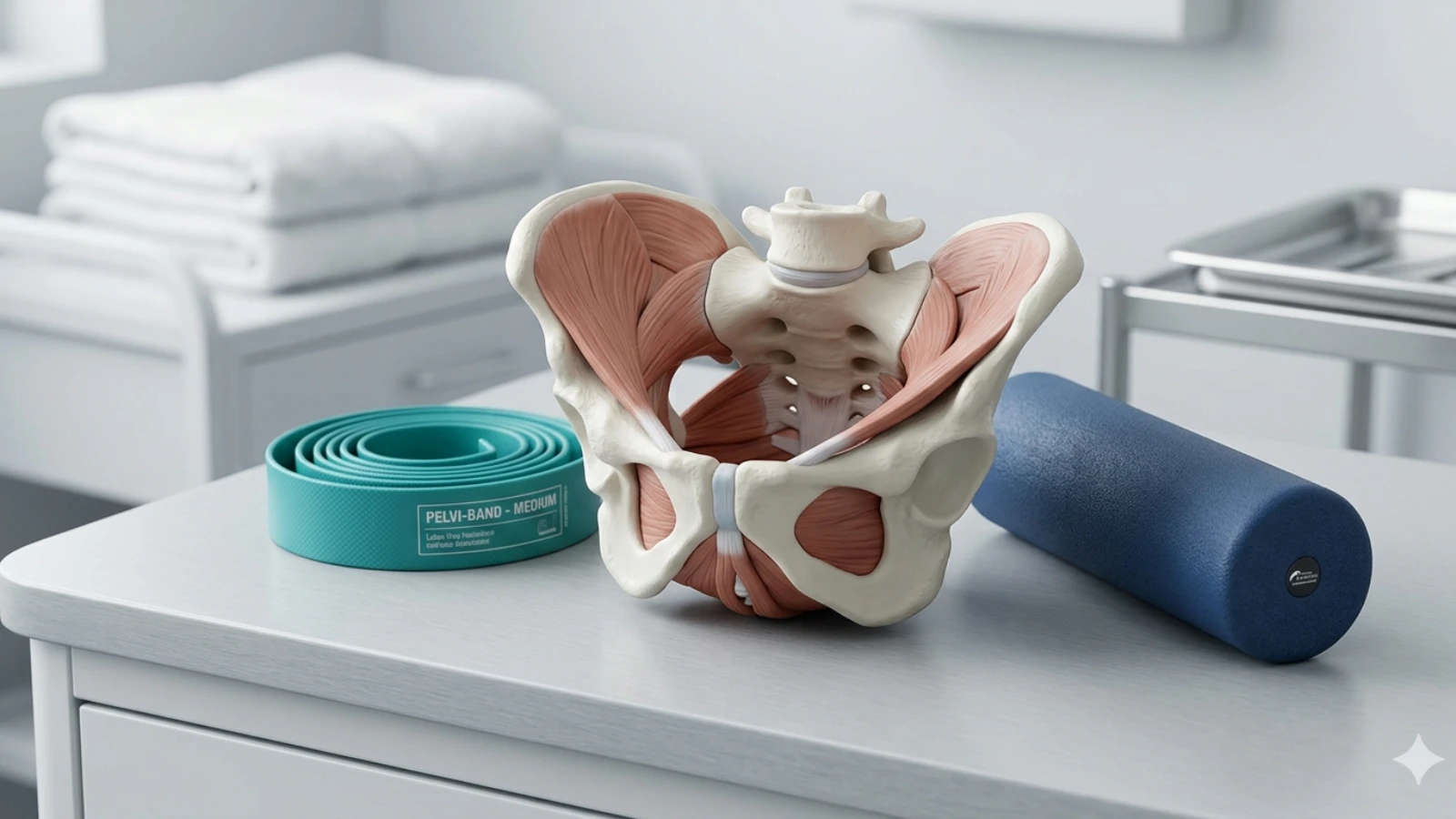 Tier 2 · Pelvic Floor
Pelvic Floor and Sexual Function: The Evidence Men Don't Get Told
The pelvic floor controls ejaculation timing, erectile rigidity, and orgasm intensity. Most men never train these muscles. Here is what research shows.
 Tier 1 · Pelvic Floor
The Male Pelvic Floor: A Muscle Group Most Men Have Never Deliberately Used
The pelvic floor controls far more than urinary continence. Here's what it actually does, why it weakens, and how to train it — with evidence.
 Tier 1 · Pelvic Floor
Pelvic Floor Dysfunction in Men: Symptoms, Causes, and Treatment
Pelvic floor dysfunction causes pain, urinary issues, and sexual problems in men. Most cases go undiagnosed for years. Symptoms, causes, and treatment options.