Reading path
Sexual Wellness
Move from anatomy and safety to the specific function, symptom, or device question you came with.
23 articles
Start here
Anal Anatomy and Sexual Health in Men: A Physiological Guide
The anal region has dense sensory innervation and direct connections to the prostate. Understanding the anatomy explains its role in male sexual health.
Choose your next step
- 1Anatomy and safety first
Use these before technique, devices, or performance advice.
- 2Prostate pleasure questions
For orgasm mechanics, first experiences, and differences from penile orgasm.
- 3Function and symptoms
Use these when ED, libido, delayed ejaculation, or Peyronie's is the main issue.
Choose your next step
If this is your first visit, use this order to understand the topic, choose the relevant goal, and move from background to action.
Anatomy and safety first
Use these before technique, devices, or performance advice.
Prostate pleasure questions
For orgasm mechanics, first experiences, and differences from penile orgasm.
Function and symptoms
Use these when ED, libido, delayed ejaculation, or Peyronie's is the main issue.
All articles
Sexual Wellness
23 articles
 Tier 3 · Sexual Wellness
Neuroscience of Male Multiple Orgasms via the Prostatic Pathway
The male refractory period following ejaculation is not an immutable law.
 Tier 3 · Sexual Wellness
The P-Spot: Precise Anatomy, Distinct Sensation, and Neurophysiological Basis
The prostate, or P-spot, offers unique sexual sensations distinct from penile stimulation due to its rich, specific innervation and deep visceral pathways.
 Tier 3 · Sexual Wellness
Prostate Stimulation and Orgasm: Unpacking Ejaculatory and Non-Ejaculatory Climaxes
Male orgasm is not always synonymous with ejaculation.
 Tier 3 · Sexual Wellness
Prostate Milking: What the Term Means and How It Differs from Prostate Massage
'Prostate milking' has two meanings: a clinical EPS collection procedure, and the prostate massage most searchers are looking for. Both explained.
 Tier 3 · Sexual Wellness
First Prostate Orgasm: What to Expect and How to Achieve It
Most men can achieve a prostate orgasm with targeted stimulation, but the first experience is often subtle and distinct from penile climax.
 Tier 3 · Sexual Wellness
Prostatic Orgasm Without Erection: Neurological Pathways and ED
Prostatic orgasm involves distinct neurological pathways from erection, allowing men with ED to achieve climax.
 Tier 3 · Sexual Wellness
Prostate Stimulation and Ejaculatory Control: Techniques and Mechanisms
Prostate stimulation offers a distinct pathway to orgasm and can enhance ejaculatory control.
 Tier 3 · Sexual Wellness
L-Citrulline vs L-Arginine: RCT Dosing Thresholds for Nitric Oxide-Mediated Erection
L-citrulline raises plasma arginine 1.5x longer than direct supplementation, but only doses ≥6g/day improve erectile function in RCTs.
 Tier 3 · Sexual Wellness
Maca Root and Sexual Function: Evidence from Randomized Controlled Trials
Maca root improves libido and sexual function in men, including those on SSRIs, based on RCT evidence.
 Tier 3 · Sexual Wellness
Peyronie's Disease: Causes, Diagnosis, and Treatment Options
Peyronie's disease causes penile curvature from fibrous plaque. Collagenase injection is the only FDA-approved non-surgical treatment with clinical evidence.
 Tier 3 · Sexual Wellness
Porn-Induced Erectile Dysfunction: Evidence, Mechanism, and Recovery
PIED is ED with partners despite normal erections to pornography. The neurobiological hypothesis is plausible but clinical evidence remains limited.
 Tier 3 · Sexual Wellness
Anal Anatomy and Sexual Health in Men: A Physiological Guide
The anal region has dense sensory innervation and direct connections to the prostate. Understanding the anatomy explains its role in male sexual health.
 Tier 3 · Sexual Wellness
Delayed Ejaculation in Men: Causes, Mechanisms, and Treatment
Delayed ejaculation is the least studied male sexual dysfunction. Neurological, psychological, and pharmacological causes each require different treatments.
 Tier 3 · Sexual Wellness
Prostate Orgasm vs Penile Orgasm: Neurological and Physiological Differences
Prostate and penile orgasms use different nerve pathways and produce distinct physiological responses. The differences explain why experiences feel different.
 Tier 3 · Sexual Wellness
Rectal Stimulation and Prostate Arousal: The Physiological Mechanism
Rectal fullness and stimulation activate prostate arousal through mechanoreceptors, shared nerve pathways, and anatomical proximity. Here is the physiology.
 Tier 3 · Sexual Wellness
Venous Leak Erectile Dysfunction: Mechanism, Diagnosis, and Treatment
Venous leak ED occurs when the corpora cavernosa fail to trap blood during erection. Pelvic floor rehabilitation and surgery both have clinical evidence.
 Tier 1 · Sexual Wellness
Erectile Dysfunction: Natural Treatments With Clinical Evidence
Most ED has a vascular or neurological cause that responds to lifestyle. Here's what the clinical evidence shows for natural treatment approaches.
 Tier 3 · Sexual Wellness
Penile Health: Circulation, Tissue Health, and Long-Term Function
Penile health depends on vascular function, hormonal environment, and tissue integrity. Here's what the evidence shows about maintaining it across decades.
 Tier 3 · Sexual Wellness
Premature Ejaculation: Evidence-Based Techniques and Treatment Options
Premature ejaculation is the most common male sexual dysfunction. Behavioral techniques, pelvic floor training, and medications all have clinical support.
 Tier 3 · Sexual Wellness
Prostate Massage: Technique, Anatomy, and What to Expect
Practical technique for prostate massage — location, correct approach, sensation progression, and device use. For therapeutic and pleasure purposes.
 Tier 3 · Sexual Wellness
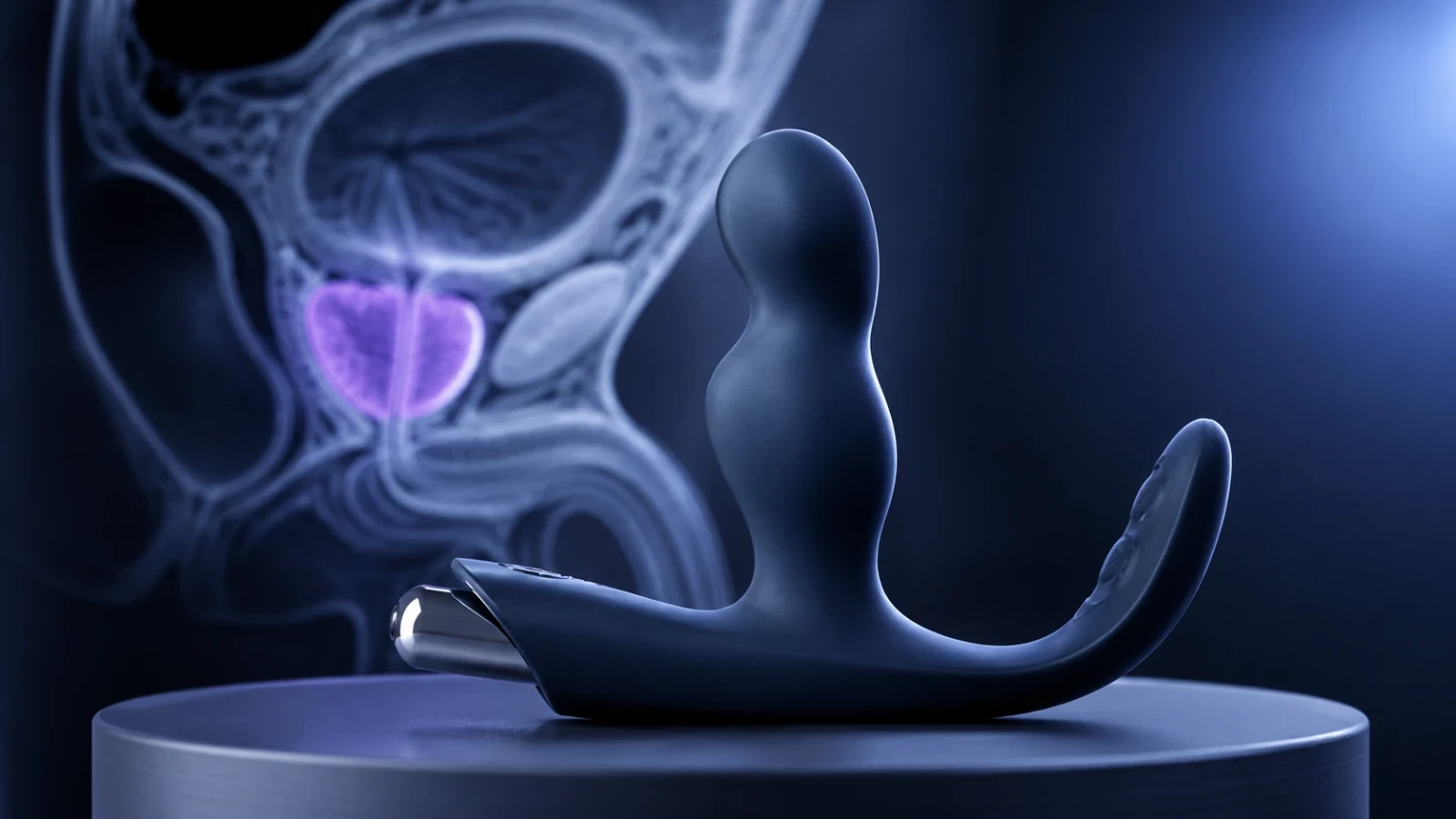
Prostate Massage Devices: A Science-Informed Buying Guide
Device selection for prostate stimulation mapped to anatomy. What device characteristics actually matter, what to look for, and how to choose.
 Tier 3 · Sexual Wellness
P-Spot vs G-Spot: A Neural Pathway Comparison
The P-spot and G-spot share homologous anatomy and analogous neural pathways. Here is the neuroscience explaining why they produce similar reported experiences.
 Tier 3 · Sexual Wellness
The Prostate Orgasm: Anatomy, Neuroscience, and What the Research Shows
Prostate orgasm uses different spinal pathways than penile orgasm — pelvic visceral afferents at L1–L2, not just S2–S4. The anatomy and neuroscience.