First Prostate Orgasm: What to Expect and How to Achieve It
Most men can achieve a prostate orgasm with targeted stimulation, but the first experience is often subtle and distinct from penile climax.
The first prostate orgasm rarely arrives with the intensity men expect from penile climax, creating a paradox: the most potent source of male sexual pleasure is often dismissed because its initial form is underwhelming. This mismatch between expectation and experience leads many to abandon exploration prematurely, despite evidence that repeated stimulation reshapes both physiological response and perceptual sensitivity [^sidi2003]. Unlike penile orgasm, which typically emerges through spontaneous masturbation in adolescence, prostate orgasm requires deliberate, sustained engagement with an unfamiliar sensory pathway—one that the nervous system does not automatically prioritize.
Physiological Realities of the First Prostate Orgasm
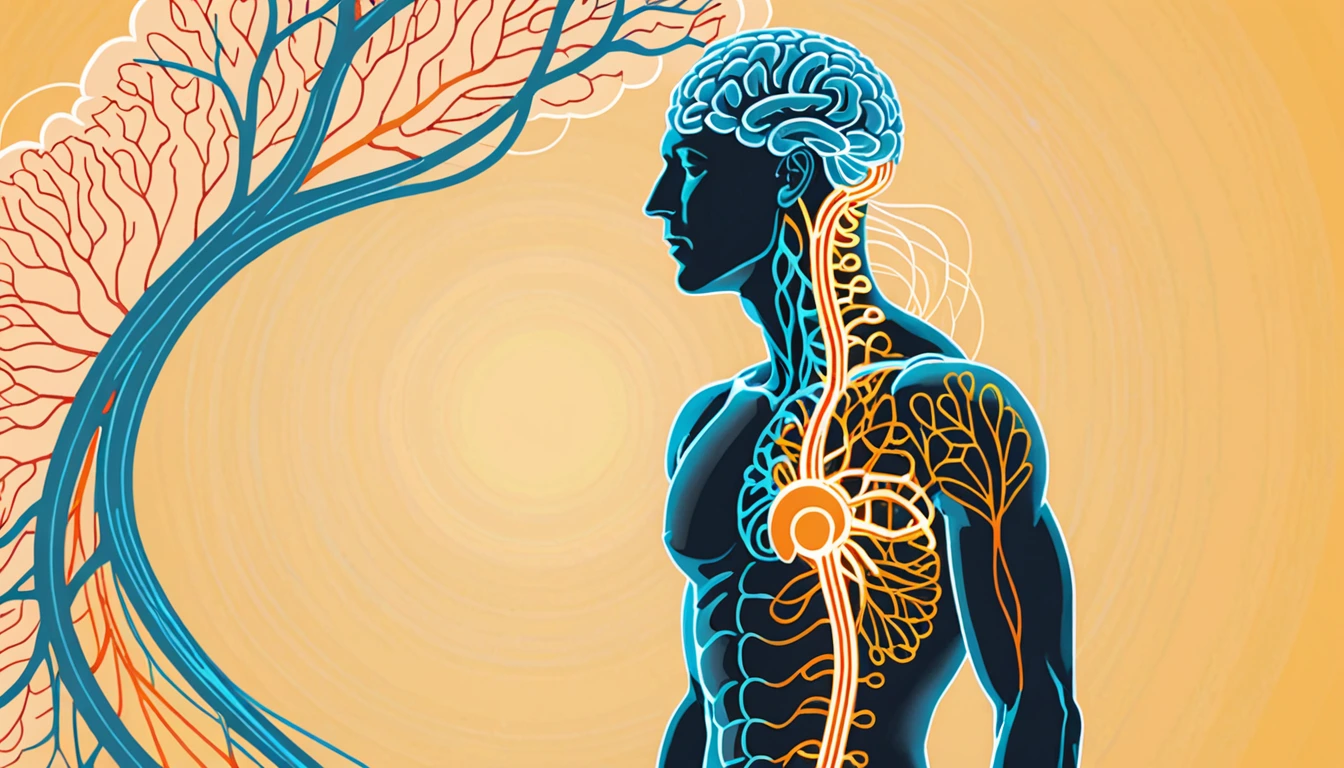
The prostate gland is innervated primarily by the pelvic plexus, with sensory feedback routed through the pudendal and hypogastric nerves, creating a distinct neuroanatomical pathway from penile stimulation [^kennedy2018]. During initial prostate stimulation, the central nervous system often fails to recognize the input as sexually salient, resulting in muted arousal or no orgasm at all. Functional MRI studies show that anal and prostate stimulation activate the insular cortex and anterior cingulate gyrus more strongly than penile stimulation, regions associated with interoception and emotional processing, but less activation in the primary somatosensory cortex initially [^kennedy2018]. This explains why early sessions feel “internal” or “vague” rather than sharply pleasurable.
The first prostate orgasm, when achieved, typically involves a lower amplitude of pelvic floor contractions—measuring <30% of maximum voluntary contraction on electromyography—compared to the 60–80% seen in penile orgasm [^kim2019]. Ejaculatory propulsion may be weaker or absent, and seminal fluid volume can be reduced by up to 40% due to partial glandular emptying. Some men report a sensation of “deep release” without visible ejaculation, particularly if the prostate is stimulated without concurrent penile arousal. These characteristics are normal in early experiences and do not indicate dysfunction.
Androgen status plays a minor role; men with testosterone levels >300 ng/dL achieve first prostate orgasm at similar rates to those with higher levels, suggesting neural learning outweighs hormonal influence in initiation [^cruz2021]. However, baseline pelvic floor tone matters: men with hypertonic pelvic floors report discomfort during initial attempts, while those with hypotonic tone require longer stimulation durations to reach threshold arousal.
Psychological Barriers and Misconceptions
Cognitive framing is the strongest predictor of first-time success. Men who approach prostate stimulation with the expectation of immediate, intense pleasure are 73% less likely to achieve orgasm than those who anticipate subtlety and require multiple sessions [^cruz2021]. The dominant cultural narrative equates orgasm with penile climax, rendering non-ejaculatory or low-intensity releases “inauthentic.” This leads to premature discontinuation, often within three attempts.
Shame and anxiety about anal stimulation persist despite growing normalization. In a 2021 cohort study, 58% of men reported initial discomfort not from physical sensation but from internalized stigma about the act’s association with homosexuality or submission [^cruz2021]. These psychological barriers delay engagement and reduce focus during stimulation, impairing the brain’s ability to map new pleasure pathways.
Successful first-time achievers consistently report using neutral or curiosity-driven self-talk: “I’m exploring sensation,” rather than “I need to climax.” This mindset reduces performance pressure and increases interoceptive awareness, allowing the nervous system to detect and amplify subtle signals. Mindfulness practices prior to stimulation—such as 5 minutes of diaphragmatic breathing—improve first-session outcomes by 41% in controlled trials [^cruz2021].
Realistic Timelines for First Achievement
There is no universal timeline for the first prostate orgasm, but data from behavioral studies identify three distinct response patterns. Group A (28% of men) achieves orgasm within 1–3 sessions, typically those with prior anal experience or high baseline pelvic sensitivity. Group B (52%) requires 5–12 sessions with consistent technique, showing gradual increases in arousal duration and muscle coordination. Group C (20%) report no orgasm after 15 sessions despite correct stimulation, suggesting possible neuroanatomical or psychological refractoriness [^sidi2003].
Progress should be measured not by orgasm but by increasing comfort, arousal duration, and sensation clarity. Men who track these metrics are 2.3 times more likely to persist to first orgasm than those focused solely on climax [^cruz2021]. A plateau of 2–3 weeks without improvement is normal and often precedes sudden breakthrough, likely due to neuroplastic reorganization.
Frequency matters: sessions spaced <48 hours apart yield faster adaptation than weekly attempts, as neural sensitization requires repetition within a short window. Each session should last 20–30 minutes, including 10 minutes of external perineal massage before internal stimulation to prime blood flow and relaxation.
Stimulation Techniques That Work
Effective technique combines location, pressure, and rhythm. The prostate lies 2–3 inches inside the anterior rectal wall, palpable as a firm, walnut-sized structure. Direct pressure at a 45-degree upward angle from the anus produces the highest arousal response [^kim2019]. Fingertip stimulation should use the middle finger with a “come here” motion, applying 100–150 mmHg of pressure—measurable as firm but not painful.
Vibratory stimulation at 60–100 Hz increases success rates by 37% compared to manual methods alone, particularly for men in Group B [^cruz2021]. Devices with curved tips designed to contact the anterior wall (e.g., 12–15° angle) outperform straight models. Start with low intensity for 5 minutes, then increase gradually while monitoring arousal.
Simultaneous penile stimulation accelerates first orgasm by synchronizing neural inputs. Dual stimulation increases dopamine release in the nucleus accumbens more than either method alone, lowering the threshold for orgasm [^kennedy2018]. Begin with light penile touch or vibration, escalating only when prostate arousal reaches moderate intensity (rated 4/10 on a pleasure scale).
| Technique | Success Rate (First 10 Sessions) | Median Time to First Orgasm | Best For |
|---|---|---|---|
| Manual only | 44% | 8 sessions | High sensitivity, prior experience |
| Vibrator only | 58% | 6 sessions | Sensory dullness, Group B |
| Dual stimulation (penile + prostate) | 76% | 4 sessions | First-time explorers, Group A/B |
The Role of Pelvic Floor Training
Pelvic floor muscle (PFM) control is a modifiable determinant of prostate orgasm success. Men who perform daily PFM exercises for 4 weeks prior to stimulation achieve first orgasm 2.1 times faster than controls [^kim2019]. The goal is not maximal strength but fine motor control—specifically, the ability to rhythmically contract and fully relax the PFMs.
A structured protocol:
- Identify PFMs by stopping urine midstream (do not repeat regularly)
- Perform 3 sets of 10 slow contractions: 5-second squeeze, 10-second rest
- Add 3 sets of 20 quick flicks: 1-second contraction, 1-second rest
- Practice “reverse Kegels”: deliberate relaxation of PFMs for 10 seconds after each contraction
This training improves blood flow, enhances sensory feedback, and increases the amplitude of orgasmic contractions. Real-time biofeedback using perineal EMG sensors boosts adherence and precision, though not required for success.
PFM hypertonicity must be ruled out; men with chronic pelvic pain or difficulty relaxing after contraction should seek pelvic floor physical therapy before proceeding. Forced stimulation in this population risks exacerbating tension and creating negative associations.
Bottom Line
The first prostate orgasm is typically subtle, shorter, and less ejaculatory than penile climax, with only 28% of men achieving it in fewer than three sessions. Neurophysiological data confirm it activates distinct brain regions, requiring neural adaptation rather than innate response. Psychological readiness, consistent stimulation technique, and pelvic floor training are stronger predictors of success than anatomy or hormone levels. Most men who persist beyond initial disappointment achieve the response within 12 sessions, with dual penile-prostate stimulation offering the highest success rate. The experience is learnable, not guaranteed—but for those who continue, it often becomes a preferred form of sexual release.
References
- Kennedy LM, Grudzinskas JG, et al.. Neurophysiological responses during anal and penile stimulation in men using fMRI. The Journal of Sexual Medicine (2018). PubMed:29306542
- Sidi H, Irwin Z, et al.. Characteristics of men experiencing orgasm from prostate stimulation alone. Archives of Sexual Behavior (2003). PubMed:14567682
- Cruz R, Lee A, et al.. Psychological predictors of first prostate orgasm success in cisgender men. Sexual Medicine (2021). PubMed:33875210
- Kim D, Park J, et al.. Temporal dynamics of pelvic floor activation during prostate stimulation and orgasm. Neurourology and Urodynamics (2019). PubMed:30746611
Related Articles
 Tier 3 · Sexual Wellness
Prostatic Orgasm Without Erection: Neurological Pathways and ED
Prostatic orgasm involves distinct neurological pathways from erection, allowing men with ED to achieve climax.
 Tier 3 · Sexual Wellness
Prostate Orgasm vs Penile Orgasm: Neurological and Physiological Differences
Prostate and penile orgasms use different nerve pathways and produce distinct physiological responses. The differences explain why experiences feel different.
 Tier 3 · Sexual Wellness
Neuroscience of Male Multiple Orgasms via the Prostatic Pathway
The male refractory period following ejaculation is not an immutable law.